Showing posts with label volunteerism. Show all posts

Monday, July 16, 2012

Menomonie Team Feeds Hunger Fast!

During Bremer’s June hunger campaign, bank staff in my home market of Menomonie, Wis., gathered to package meals as part of the local Rotary Club’s “Kids Against Hunger” program. In a timed competition of just 30 minutes, we packaged 2,592 meals! In addition to volunteering to package the meals, Bremer also paid for all the ingredients used in the meals.

Additionally, we made folks aware that hunger exists in their communities throughout the month of June by asking clients to donate money and items for two local food shelves - Stepping Stones and Caring Ministries Food Pantry. In addition to client donations, Bremer Bank is also donating $500 to each charity.

Posted by Maltee McMahon, NRS, Wisconsin


Friday, May 25, 2012

I Have a Board that Lacks Energy and Enthusiasm

“I have a board that lacks energy and enthusiasm…………why hasn’t this been worked out yet?”

Area nonprofits met for the monthly Bremer Brown Bag conversation and “Spirit Bear” shared that he has a board that attends meetings and serves on committees, but when the time arrives to sell those darn raffle tickets and recruiting attendance at fundraising events, the road blocks go up. "My friends are tired of me asking and I’m going to be out of town and I have NO time to do anything.”

Well…………when the members joined the board, were the expectations of service clearly and openly communicated?

Do you have a working board, advisory board or combo of the two? What could we call that? working + advisory= workry? advirk? worksory? …….[looking for help here…..]

Has the board experienced what you do? Have you provided the forum for them to touch, feel and see the work that you engage in everyday in your nonprofit? Do they even know what you do?

As the executive director, how are you engaging your board members in the mission and vision of your work?

Work-Wisdom-Wealth------this is what we want from our board members.

Invite-Engage-Ask-----------this is how you do it.

Connect the disconnected.

Posted by Amy Wyant, NRS, Brainerd

Wednesday, May 23, 2012

Making a Difference in Our Kids’ Future

Cari Dietman, vice president at Bremer Bank, has served on the board of directors and has served as a volunteer instructor at the Area Learning Center for the past eight years for Junior Achievement.

Junior Achievement (JA) is the world’s largest organization dedicated to educating students about workforce readiness, entrepreneurship and financial literacy through experiential, hands-on programs.

JA’s programs help prepare young people for the real world by showing them how to generate wealth and effectively manage it, how to create jobs which make their communities more robust, and how to apply entrepreneurial thinking to the workplace. Students put these lessons into action and learn the value of contributing to their communities.

Its unique approach allows volunteers from the community to deliver our curriculum while sharing their experiences with students. “This work is important to me because it teaches kids good, personal financial choices and ultimately helps them become a successful, productive member of society,” said Dietman, “I really enjoy working with these kids and find it very fulfilling!”

Posted by Kathy Grochow, NRS, St. Cloud

Wednesday, May 9, 2012

The Value of Volunteer Time


This is always helpful information to know and when you add up the dollar amount per hour of the volunteer hours you, staff and colleagues donate in a given year - it's a lot of money!

The estimated value of volunteer time for 2011 is $21.79 per hour. The estimate helps acknowledge the millions of individuals who dedicate their time, talents, and energy to making a difference. Charitable organizations can use this estimate to quantify the enormous value volunteers provide.

The value of volunteer time is based on the average hourly earnings of all production and nonsupervisory workers on private nonfarm payrolls (as determined by the Bureau of Labor Statistics). Independent Sector takes this figure and increases it by 12 percent to estimate for fringe benefits.

Charitable organizations most frequently use the value of volunteer time for recognition events or communications to show the amount of community support an organization receives from its volunteers.

According to the Financial Accounting Standards Board (FASB), the value of volunteer services can also be used on financial statements –- including statements for internal and external purposes, grant proposals, and annual reports –- only if a volunteer is performing a specialized skill for a nonprofit. The general rule to follow when determining if contributed services meet the FASB criteria for financial forms is to determine whether the organization would have purchased the services if they had not been donated. Accounting specialists may visit FASB’s website for regulations on use of the value of volunteer time on financial forms: http://www.fasb.org/pdf/fas116.pdf.

Posted by Kathy Grochow, NRS, St. Cloud

Monday, April 16, 2012

Exploring America's Diversity

I was honored earlier this month to be among panelists at Minnesota State University Mankato's 2nd Annual Midwest Ethnic Studies Conference. Bremer Bank has been open less than a year in Mankato and the community has welcomed us with warmth and healthy curiosity. In this event, the curiosity was about Bremer’s attention to educating employees on the rich, varied stories and traditions of new immigrants and Native Americans in our communities. “This conference includes lots of the types of stories and experiences we try to offer to our bankers,” I said. “But since they need to be in the bank and available to customers, we do what we can to organize training and cultural experiences right in our bank buildings.”

In our Marshall, Willmar and Redwood Falls banks, for example, we’ll be honoring Asian-Pacific American Heritage Month with Bremer/Hmong Days in late May. Of course, ethnic food is always a part of the experience. I snapped a photo of the eggrolls that were part of our conference lunch. See below – hot, fresh and delicious right from the kitchen!

Pictured with me below are co-panelists who I have been privileged to meet in my work in our Bremer communities, including Mankato, Owatonna and Marshall. L-R Abdi Sabrie, Executive Director, African Family and Education Center, Ethan Bates, Community Coordinator, Southwest Minnesota Housing Partnership and Ernesto Velez Bustos, Executive Director, Centro Campesino.


Lois Schmidt, NRS, Willmar Charter

Monday, March 26, 2012

For Only $10 Dollars

I paid my $10 annual dues recently and officially became a member of the Crow Wing County Volunteer Coordinators. What a dynamic group of women and one man who network monthly and are 1000% committed to their nonprofit work in the community.

We were discussing the upcoming National Volunteer Week April 15 to the 21 and the question was posed: “How do you buy the trinkets for your volunteers and how to do you budget for it?”

A 27-minute discussion followed and I feverishly took notes. I felt like I was at a workshop and started feeling a little guilty to be getting such great ideas for a mere $10 dollar bill.

“You have to thank them, have to validate your volunteers. I do it at three mandatory meetings a year. My board does all the prepping and serving. Once during Volunteer Week, one in August during a picnic and one in December for the holiday season. I label the mandatory meetings volunteer continuing education.”

“We don’t do anything. Our volunteers don’t want us to spend any money on them. They don’t even want certificates.”

“We budget for volunteer recognition and host a lunch or dinner at a restaurant once a year.”

“I host a potluck at my home on the lake, the volunteers love it.”

“During the year, I take pictures of people volunteering, frame them and give out at the end of the year.”

“I buy cards and send them on their birthdays. They like getting the mail.”

“I call my volunteers on their birthday and sing to them.”

“I email an e-card, I like the site Jackie Lawson for only $10.”

“Each volunteer wants something different, some want that pin or certificate, some don’t. It’s an “art” to figure out how to thank each person.”

“I like to put their pictures in the newspaper.”

“We have a volunteer Blog and they like that.”

“It’s kind of a ridiculous place to cut because as budgets get tighter, my volunteers do the equivalent work of two full time employees so recording their hours is so important, it validates that they gave service to our organization.”

“I’m in the process of planning the 39th annual recognition banquet and I’m looking for entertainment for the 55+ crowd, anyone have an idea?”

As the meeting wrapped up, my agenda was filled with notes from the experts who live this everyday and build the relationships with the hundreds of volunteers who continue to do the good work in our community. If only every meeting that I attended offered such practical and useful words of wisdom……

Amy Wyant, NRS, Brainerd

Friday, March 23, 2012

Alleviating Homelessness

Having been involved with homeless programs in the Fargo-Moorhead community for many years, I present some thoughts here on what someone might wish to do to help alleviate this nationwide problem. It seems incongruent to me that amidst the plenty we have here in America we should still have citizens who have no place to call home.


I know that no one person will or should take on all the suggestions on this list. But most of us can do one or two of these things, maybe even more. Also, I don’t take credit for the list. It is a condensation of something someone else offered up, but it certainly has merit.

Here are some things anyone might consider doing in your own community.

I resolve …
--to warmly greet every homeless person I meet
--to deliver a sermon, lecture or paper on homelessness
--to volunteer on one Habitat for Humanity House
--to meet with my legislators to share facts on homelessness
--to have my organization sponsor an essay contest on homelessness
--to hire a homeless person
--to mentor/tutor a homeless child
--to include people experiencing homelessness in my prayers
--greet warmly every homeless person I meet
--to listen to the facts on homelessness without preconception
--to learn how to make a difference

There’s much to be done to make sure everyone has a safe home, anyone can help make a difference in their community.

Howard Barlow, NRS at Bremer Bank in Fargo

Monday, March 5, 2012

Keeping Up When Times Are Tough

Katie Bull and Mary Quirk
“How do I keep up?” is a common question we hear at the Minnesota Association for Volunteer Administration (MAVA). Many volunteer programs are running on a tight budget and experiencing increasing demands for volunteers. We have collected ideas from MAVA members on how they cope with fiscal stress as well as rapid changes in volunteer availability and organizational needs for volunteer service:

1. Streamline and standardize practices for intake of volunteers and involve volunteers in the intake and training. Often the “bottleneck” in bringing on board much needed volunteers is the time it takes to get them started. Some strategies that have proven successful:
• Use group sessions to cover the standard information about the organization and volunteering, saving one-on-one time for learning about the volunteers. If you find yourself repeating the same information to volunteers individually, figure out how that information can be conveyed in a way that takes less of your time.
• Have the forms and processes for volunteers to come on board as simple and standard as possible, so you do not have to “recreate the wheel” for something you have done before.
• Look at how volunteers can be involved in that initial intake and orientation. Can a volunteer: Do a first interview? Respond to communication from interested volunteers? Do part of the orientation? Do on-the-job training for volunteers?

2. Explore less time intensive volunteer recruitment. With the trend of volunteers making shorter term commitments, recruitment becomes a bigger job. Here are some ideas to address this:
• Involve volunteers recruiting other volunteers. Ask volunteers to help you find more people like them. Give volunteers business cards to recruit friends. Offer a prize to volunteers who bring in the most volunteers.
• Form partnerships with schools and other organizations to recruit volunteers. Invest in creating a volunteer “pipeline” where a relationship with a school, church or business will create an ongoing stream of volunteers.
• Make the most of web recruiting, listing opportunities at your local volunteer center or VolunteerMatch.com. Have a vibrant, visible invitation to volunteer on your website.

3. Look at time efficiencies through use of technology. One of the biggest changes we are seeing in volunteer programs is new use of technology.
• Explore options now available for volunteers to sign up for opportunities on line through free web tools such as VolunteerSpot.com.
• Become aware of generational preferences in communication (e-mail, phone, social media) and use communication forms that will get the best results with the least effort.

4. Advocate for resources for engaging volunteers. Investing more in volunteers might be a wise decision for your organization. Put together your data on the value volunteers bring and make the case to the key decision makers in your organization.

MAVA is a statewide organization that provides resources to the volunteer community. For more information on engaging volunteers, check out MAVA’s website at http://www.mavanetwork.org/ or e-mail office@mavanetwork.org.

Post by: Katie Bull, MAVA Membership, Communications and Services Manager
Mary Quirk, MAVA Executive Director

Friday, January 27, 2012

A Positive Outlook

Thinking about nonprofits during these difficult economic times, it is quite easy to paint a bleak picture. Not for Ginny Ormsby, executive director of Northwoods Shelter in Amery, Wis. She has a positive outlook for her organization. Ormsby believes that her caring community and the support of other nonprofits has resulted in Northwoods' ability to access more help for its homeless clientele.

Like most nonprofit directors, Ormsby wears many hats. The benefit of this she believes, is that it allows her to do more than she thought she could in her job. For example, she is now a better public speaker than she imagined being simply because the opportunity presented itself and she took it. In the process of helping her organization, she is also upgrading her own skills.

Ormsby said she realized that once you get over the hurdle, it was really not that big afterall.

One of the highlights of her job is to work with the Western Wisconsin Continuum of Care Collaborative that meets periodically to discuss and support nonprofit issues for a seven-county area. Everyone is helpful, open and willing to share. It is a great support system for participants.

Another example of good news for Northwoods Shelter is that every month, Ginny receives about 200 pounds of food donation in soups, hot dishes, stews, etc. from a local restaurant. She completely believes that this happens only because everyone cares in her community.

She is excited to be on Facebook and encourages other nonprofits to jump on board. This would be a good way to connect and share nonprofit information.

In addition to low-income work experience, Ormsby's academic experience is from University of Wisconsin-Eau Claire with a bachelor's degree in music education, specializing in double reed woodwind and piano. Music relaxes her and helps her to stay motivated.

Northwoods Homeless Shelter also received a grant from Otto Bremer Foundation in December, 2011. 

Pictured above is Ormsby (left) next to Bremer Bank employee Tonya Fuglsang, the co-chair of the Northwoods Board of Directors.
Posted by Maltee McMahon, NRS, Wisconsin

Tuesday, December 27, 2011

Building Healthy Communities with 'Bigs' and 'Littles'

Bremer and the Otto Bremer Foundation are working on building healthy communities through partnerships like the one with Big Brothers Big Sisters in Western Wisconsin and The University of Wisconsin-River Falls (UWRF). The UWRF Friends Program is a student organization that serves youth from the community through one-to-one mentoring relationships in partnership with Big Brothers Big Sisters. The Friends program originated to provide college students, who do not have their own transportation an opportunity to be involved with Big Brothers Big Sisters.

The college students meet their ‘Littles’ on campus and participate in fun and inexpensive activities around campus that are set up by the Friends Leadership Team. Some examples of the activities include: ice skating, day with the physics department, trip to the campus radio and television studio and scavenger hunts.

The Big Brother Big Sister program received a grant from Otto Bremer Foundation to support its work in the St. Croix Valley area.

Maltee McMahon, NRS, Wisconsin


Wednesday, December 21, 2011

When Volunteers Aren’t That Great – Part 2

Thank you to Katie Bull, Membership, Communication & Service Manager at Minnesota Association for Volunteer Administration (MAVA) for writing this guest post. If you missed Part 1, check out November 1, 2011 post.

Lois Schmidt, NRS, Willmar, Marshall, Redwood Falls
While volunteer performance issues are not a favorite issue to tackle, they can become surprisingly clear when we dissect possible causes for the conduct. Problems with a volunteer usually stem from one of two things; organizational inefficiencies or behavior of the volunteer.

For instance, let’s look at one of the most common issues leaders of volunteers face when working with volunteers: dependability. A volunteer is consistently late for their volunteer shift, never calls to alert the staff of tardiness and shows little anxiety at showing up late. The first thought that might come to our heads is that the volunteer is lazy or just undependable- they can’t be trusted to be on time. However, we need to look past our initial judgments and look for possible reasons for this tardiness.

First, analyze the practices of your organization and volunteer program and ask a few questions: Was it explained to the volunteer during orientation or at the start of service the importance and expectation of timeliness? Do volunteers know that clients are waiting or other volunteers need to be relieved? Was the volunteer’s lateness pointed out and recorded at the first incidence or was it silently observed by staff? Asking these questions can reveal if there are practices that need to be improved to prevent this issue from happening in the future, and will help staff see possible reasons for the volunteer’s tardiness other than a personal quality.

Next, we can look at the behavior of the volunteer. It is important not to judge the volunteer on personality traits but instead to look at behavior and how it is affecting the volunteer’s work. Is there something preventing the volunteer from getting to the organization on time, such as transportation problems or conflicts? Is this behavior that has been ongoing since the volunteer started service, or has it just started recently? Could the volunteer’s understanding of time be different from that of the organization? Western cultures tend to highly value timeliness, while many other cultures have a very different understanding of time.

Now that we have looked more closely at what could be causing the problem, it’s time to address it. Here are some suggestions for conducting constructive conversations around performance issues:

1. Don’t attack personality, focus on performance.
2. Be specific. Do your homework and have specific examples of behavior concerning you. Don’t say: “You always do it that way.”
3. Keep conversations private.
4. Make the intervention timely, but do not approach until you are rational and calm.
5. Reiterate expected behavior using “I” not “you” language.
6. Get agreement on the problem. Allow the volunteer to explain from his/her perspective.
7. Determine a shared commitment for finding a solution to the problem.
8. Agree on a plan (both parties) to solve the problem.
9. Arrange for a follow-up meeting to determine if the issue is resolved or needs alternative solution options.

Often we think that issues with a volunteer means letting that volunteer go. But, after asking yourself the questions above and finding the root of the issue, other options will reveal themselves. Some of these alternatives to “firing” a volunteer are:

1. Re-assign to a new volunteer position within the organization, if appropriate.
2. Train/coach or re-train, depending on whether the volunteer received adequate preparation to handle the position in the first place.
3. Provide a more motivating environment for the volunteer if s/he has lost interest in the work.
4. Give information about any central referral source in the community or online where the volunteer might find a position better suited to him/her.
5. If the volunteer, due to age or disability, is no longer able to carry out the work and no other position is appropriate, retire him/her with style and appreciation for past service.

If you have any other questions regarding volunteer performance or leadership of volunteers in general, please feel free to contact MAVA at (651)255-0469 or office@mavanetwork.org.

Wednesday, December 7, 2011

2011 Philanthropists of the Year

Tom and Barb Johnson of Menomonie was honored recently as the 2011 Philanthropists of the Year through the Chippewa Valley Fundraising Professionals. The Johnsons are well known for their active philanthropy in the Menomonie area and Chippewa Valley.

Being a philanthropist and promoting philanthropy is important to the Johnsons. Tom said, “I am not interested in promotion for the sake of promotion itself, this seems like a dead end. Philanthropy, however, is different. Philanthropy, properly focused, can provide benefits for those in need and often for people we may never know.

“The other important aspect of philanthropy is that people find joy in participating in altruistic activities. It seems we often go through life searching for things that make us happy... when, through an act of kindness to others, happiness simply finds us!”

Additionally, attending the event was Mark Kalscheur, Bremer Bank Retail Manager in Menomonie, photographed below with one of the first recipients of the Bert Swanson Scholarship award, Michelle Dingwall from Feed My People organization.

Maltee McMahon, NRS, Wisconsin

Monday, November 28, 2011

This Goes Out to the Ones We Love

As Bremer Nonprofit Resource Specialists, we know that those of you who are representing nonprofit and community organizations in our market areas work hard to build relationships with private sector businesses in your communities. Sometimes the work is successful and sometimes it’s not. But it is worth pursuing in whatever big or small ways your organization can establish value and credibility with businesses. Public-private relationships can build respect between the business and the nonprofit, as well as provide opportunities for collaborative work that meets the needs of both sectors. Best of all, what often goes along with solid, respectful relationships are useful resources such as employee volunteers and in-kind or cash donations to support the work of nonprofit partners.

Readers of our blog regularly see photos like the one here that captures what we call “The Bremer Story.” The Mankato Area Living At Home Block Nurse Program recently was awarded a grant from The Otto Bremer Foundation. The story is that our bankers work everyday to meet clients’ needs, deliver profits to our owner, the Otto Bremer Foundation, which makes grants to eligible nonprofits, and ultimately builds healthy communities through the nonprofits’ work. Averaging over 27 million dollars in grants per year over the past five years to nonprofits in Bremer Bank communities, it’s a powerful way to support valued groups that provide crucial services. Additionally, at the local bank level, thousands of dollars and thousands of employee volunteer hours further deepen our relationships in the community.

At Bremer Bank, we know we can only be as successful as are our communities’ organizations, along with the people and families they serve. Our business model – The Bremer Story – depends as much on your good work as nonprofits as it does on our good work as a private, for-profit financial services provider.

Lois Schmidt, NRS, Willmar


Pictured L-R:
Jolene Wall, Bremer Treasury Management; Cindy Chadwick, LAHBNP Program Supervisor; Bradley Peters, Bremer Bank President; Richard Ringler, Bremer Business Banking, Mankato

Wednesday, November 16, 2011

Six Trends for Philanthropy Noticeable by 2014

In a guest post on the National Center for Responsive Philanthropy’s blog, Bill Somerville of the Philanthropic Ventures Foundation predicts six trends for philanthropy that will be noticeable by 2014. He makes these predictions based on pressures that are building in the current system of philanthropy, including; increasingly burdensome paperwork and slow decision-making in the face of urgent need, a shift of generational power, a resurgence of interest in grassroots initiatives, and a need for more entrepreneurial grant-making to tackle complex issues.


These changes include:
• More entrepreneurial mindset within foundations: “Philanthropy will involve more risk taking” and “more tolerance for an occasional failure”
• More focus on seeking out and funding “outstanding people and organizations,” versus long drawn-out application processes, as the means to undertake due diligence
• More true partnering between grantors and grantees: “More collegial relationships” between applicants and foundation staff
• More trust-based relationships within foundations, resulting in more discretionary grant-making and faster grant-making processes
• More discretionary and flexible funding for grassroots programs in particular
• A critical mass of young people engaged in philanthropic work, bringing new experiences, perspectives, and practices to shape the field

Myrna Meadows, NRS, International Falls

Tuesday, November 1, 2011

When Volunteers Aren't That Great

Southwest West Central Volunteer Connections members focused their October meeting on the topic of “Handling Challenging Volunteer Performance Situations.” Yes, we are talking about when things don’t go so well with one or more of your volunteer workers. Most volunteer coordinators can relate to situations where a volunteer isn’t getting along with co-workers or customers; is not as dependable as their position needs them to be; is unable to do the work they signed on for; chooses not to follow rules or processes; is negative or misrepresents your organization; or any other example of “poor or unsatisfactory performance.”

Katie Bull (pictured above), Membership, Communications and Service Manager for Minnesota Association for Volunteer Administrators (MAVA) led the presentation and discussion at Bremer Bank in Willmar, giving participants information and guidance in working with volunteer performance issues. Challenging participants to consider why we often hesitate to deal with unsatisfactory performance or behavior with our volunteers, Katie collected our comments.

Here are a few:
• We need volunteers
• Volunteers aren’t paid
• Volunteers are often also donors
• Volunteer supervisor becomes the “bad guy” when he/she has to address matter
• No time to deal with the problem situation or behavior
• “Politics”
• Volunteer program doesn’t have policies to address problems
• Do you have additional reasons you’re avoiding dealing with this topic?

“Reasons why it’s important to handle performance and behavior issues with volunteers are not unlike the reasons any manager or boss would address the same situations with paid employees,” says Katie.

Facing up to volunteer performance problems:
• Minimizes divisiveness in the workplace
• Strengthens the overall organization or program
• Maintains good volunteers (oftentimes performing volunteers leave, rather than endure conflict)
• Minimizes stress for managers and volunteers
• Can avoid legal issues
• Can you think of more reasons why it’s worth it to face up to performance problems?

In a future blog post, I’ll share some of Katie’s ideas and tips for approaching difficult volunteer performance issues. In the meantime, I’d like to hear your thoughts, including challenges you’ve had and solutions you’ve found around this topic.

Lois Schmidt, Nonprofit Resources, Willmar Charter

Tuesday, October 4, 2011

Bremer Employees Volunteer

Feed My Starving Children is a 501c3 nonprofit Christian organization committed to feeding starving children internationally. The approach is simple: children and adults hand-pack meals formulated for starving children, and then they are shipped to more than 60 countries around the world. A Feed My Starving Children event was held in Morris on August 31, September 1 & 2. Approximately $44,000 was raised locally and more than 231,000 meals were packaged with the help of 1,106 volunteers. The Morris Bremer Bank donated money, plus 12 bank employees and five family members volunteered, some twice, to help package meals.

This is just one example of Bremer’s commitment to volunteerism and helping to build a healthy community and world.

Holly Witt, NRS Alexandria Charter


Wednesday, September 21, 2011

"Community Builder" Sponsor

Bremer Bank St. Cloud was a “Community Builder” sponsor of Habitat for Humanity’s Women Build project again for the 2011 year. Bremer employees took the day on September 14 to literally build healthy communities through it’s partnership with Habitat’s Women Build. Women Build projects make the building process as accessible as possible, and provide an opportunity for women to learn, grow, and make an impact. Most rewarding however, is that it addresses in a concrete way, the housing crisis that impacts millions of children.

This years project impacts the lives of the Kyle Hanson family. To learn more about this family go to http://www.cmhfh.org/pages/kylehanson.

Thanks to all the Bremer volunteers who helped to put the trusses on the house on a rather cold day!

Kathy Grochow, NRS, St. Cloud


Thursday, August 18, 2011

Toolkit for Recruiting and Supporting Job-Seeking Volunteers


Check out the new toolkit on supporting job seekers as volunteers from the Minnesota Association for Volunteer Administration (MAVA). The toolkit is packed full of ideas on how to maximize the benefits of job seekers as volunteers for both the volunteer and the organization. As volunteering becomes an increasingly important means for job seekers to gain skills for employability and as organizations are seeing a growth in job seekers volunteers, this toolkit, developed through a project funded by the Initiative Foundation shares successful strategies developed by organizations in Central Minnesota.

Posted by Kathy Grochow, NRS, St. Cloud

Tuesday, July 19, 2011

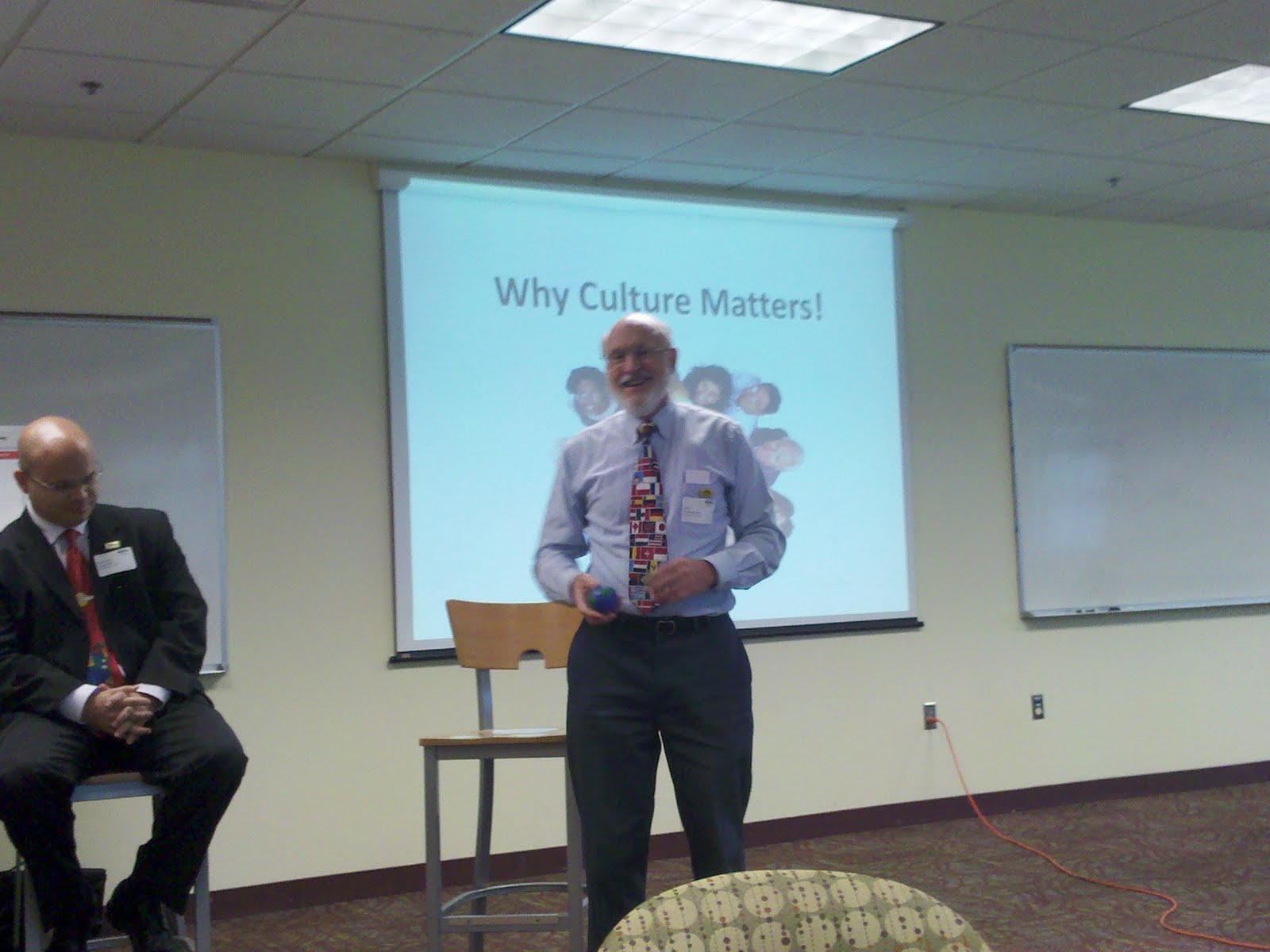
Why Culture Matters

Last week, the Corporate Volunteer Council of the Twin Cities (CVC) of which Bremer Bank is a member, hosted the program “Why Culture Matters” at Neighborhood House in St. Paul, Minn. The program featured a panel of individuals from a variety of different cultures and backgrounds sharing some perspective on what culture means to them and what things corporations should consider when volunteering with different cultural groups. Leading the panel was Gary Wederspahn (pictured left), an intercultural trainer, consultant and coach, who is also a volunteer at the Neighborhood House. Joining him on the panel were: Armando Camacho, president of Neighborhood House; Kalue Her, a development research manager at Neighborhood House; and Jon Reynolds, a basic needs specialist at Neighborhood House.

Each panelist shared some perspective based on their backgrounds and roles within Neighborhood House, a nonprofit organization based in St. Paul that provides multi-cultural and multi-lingual programs in basic needs, education, youth leadership servicing more than 10,000 participants annually. Camacho is Puerto Rican and talked a bit about his family coming to America and the true joy that he sees every day in the work done at Neighborhood House. Her, a native Hmong, immigrated to the United States with her family when she was very young. She talked about serving as the interpreter for her parents as she had learned English at a young age. She also discussed the need to give back and the sense of pride she feels working at Neighborhood House, where she is a living example of success achieved by Hmong immigrants. Reynolds was born and raised in Milwaukee and has experienced many eye opening experiences working at Neighborhood House. He talked about his struggles and embarrassing moments as he continues to learn about the different cultures served at Neighborhood House.

Wederspahn talked about the different attitudes we have about culture, which also play a part in how we interpret actions and mannerisms. For example, during the panel he did a role play where he pretended to be interviewing for a job. He talked quietly with his head down and did not make any eye contact. He asked what people’s impressions were of him and if they would consider hiring him. Camacho stated that he viewed the candidate as being respectful, whereas a Caucasian and Midwest businessman in the audience said he viewed the candidate as introverted, shy and not a good candidate. Interesting difference! Wedersphan also talked about the different spatial comfort level amongst cultures. For example, in Japan people stay some distance away from each other when they are talking so there is room to bow your head. In the United States, we have a certain comfort distance that is about an arms length away. In European countries, two people talking to each other (especially those of the same sex) can almost have their toes touching. This can make for a very uncomfortable situation when working with others from different backgrounds.

So how do you train your volunteers to work with diverse cultures so that they feel comfortable and effective? After listening to the panel, I decided that it's not as much about training, as it is about encouraging those we work with to be genuinely interested, curious and comfortable in asking respectful questions about the customs, beliefs and backgrounds we want to know more about. Simply ask, for example, where are you from? May we shake hands, or would you prefer not to? Don’t worry about being offensive or saying the wrong thing. Just ask. Most people would prefer you ask, rather than make assumptions about them, their background and what cultural tendencies they have. Good advice for everyone. The demographic landscape of the Midwest continues to change and evolve and those of us who have lived in the Midwest our entire lives need to start learning, if we haven't already, about the new and diverse cultures.

Susan Beatty, PR and Communications, Bremer Bank

Wednesday, June 22, 2011

Time Out For Stress Relief

Southwest West Central Volunteer Connections treated participants in the June 21 meeting to a morning of stress relief at Bremer Bank, Willmar’s community meeting room. The meeting theme, “Taking Care of Business By Taking Care of Ourselves,” featured Tamara Hein, Nutrition Counselor at the ACMC Weight Control Center and the Diabetes Center. Hein loaded us up on information and tips on healthy eating, healthy shopping, and snack preparation ideas for busy parents and professionals.

A couple of her references for us: Have you seen the updated USDA My Food Pyramid? It’s now My Plate, making it easy to figure out how to eat a balanced diet. “Make half your plate fruits and vegetables, and make half of your grains whole grains.” Also, it’s the season to shop locally, especially for the abundance and variety of fresh, home-grown fruits and vegetables. Check out the local foods guide focusing on farmers markets and products in the Upper Minnesota River Valley.

Doreen Mages, Certified Massage Therapist at Willmar Massage Center treated each of us to a neck/shoulder massage. Heavenly! Mages told us that massage is no longer just a luxury, it can be an important part of maintaining good health, including relieving mental and physical fatigue and relaxing muscle spasms and stiffness.

Southwest West Central Volunteer Connections is a peer led network of leaders of volunteers, many of whom are members of Minnesota Association for Volunteer Administration. Being a volunteer administrator is a rewarding, but tough job. The June program helped us to remember to take good care of ourselves so that we can take good care of our volunteers!

Lois Schmidt, NRS, Willmar